Shaping and thinning trees around Wichita and Maize, from a clean out of deadwood to lifting a whole canopy off a roofline, with every cut placed where the tree can close it.
☎ (316) 708-7344A mature shade tree is usually older than the house it stands next to and worth more than anything else outside it. Trimming is the cheapest thing you can do for one. Take the dead and crossing wood out on a sensible cycle and the tree keeps its shape and stops handing the wind something easy to break. Leave it, and it sheds limbs on its own schedule instead.
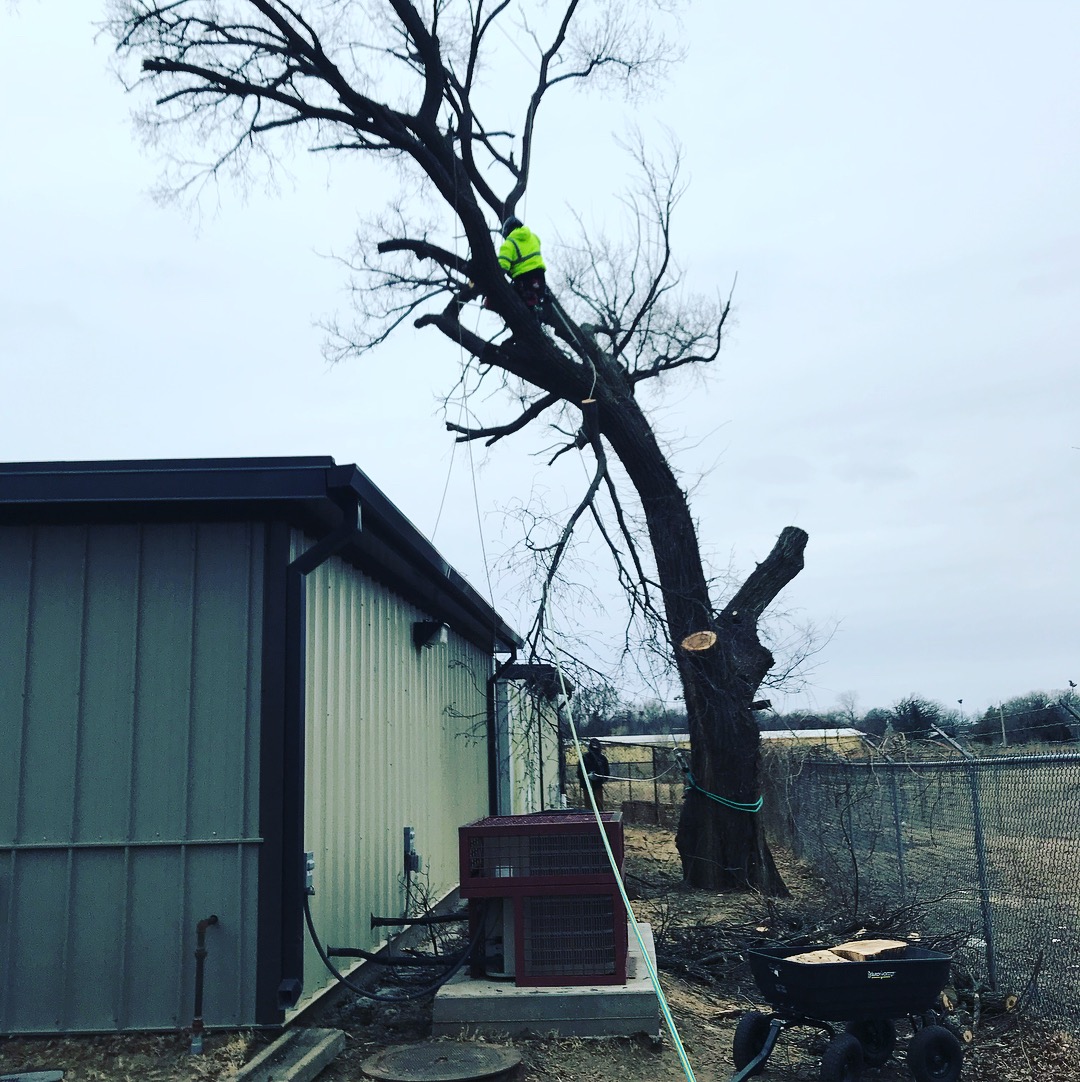
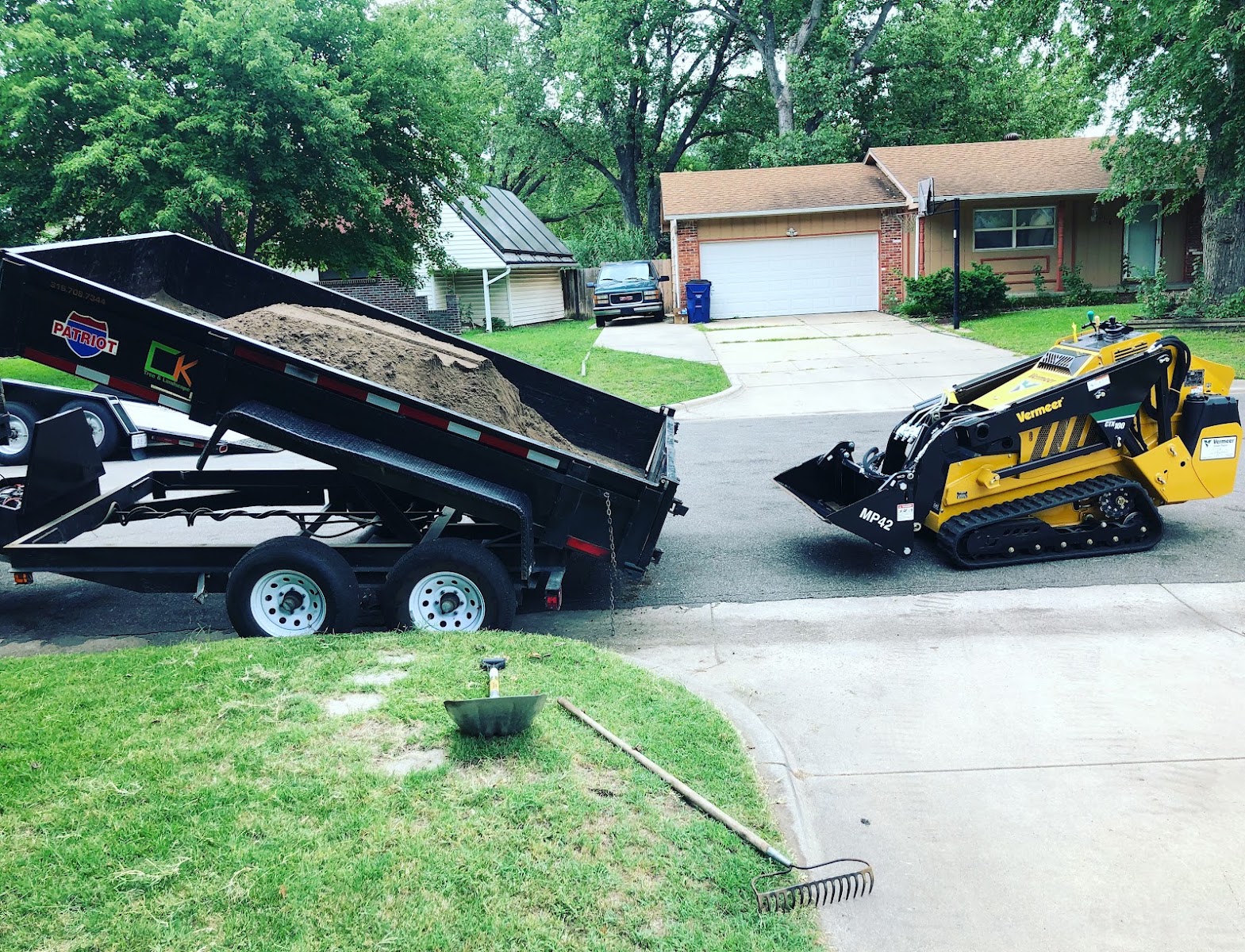
Curtis and his crew trim trees across Wichita and Maize. Most of it is ordinary, useful work: lifting limbs off a roof or a driveway, thinning a canopy that has gone solid, and pulling deadwood out before the weather does it for you. Some is close work in a back yard with a fence one side and a shed the other. Call (316) 708-7344 and we will come and look. The estimate costs you nothing.
The work
Trimming looks like tidying. Underneath it three things are happening, and every cut serves one of them:
Dead limbs, cracked limbs and limbs that have worn a hole in each other come out first. That is the wood that fails, and it fails in wind, over whatever is parked underneath.
A canopy that has grown solid catches air like a sail. Thinning opens gaps so the wind passes through the tree instead of pushing on it, which is most of what keeps a big shade tree standing.
Limbs resting on shingles wear the roof and hand the squirrels a bridge. Lifting the canopy clear puts daylight back between the tree and the house.
None of it calls for cutting the tree back hard. Topping, which means taking the main leaders back to stubs, is the fastest way to ruin a good tree. What grows back is thin and badly attached.
“Curtis and his crew did an excellent job of trimming our tree in the backyard. There is very little space to work and they were skilled in the cutting so that the area surrounding was not disturbed. Curtis listens very well to what I wanted.”Angie Ray, Google review
You do not need to know the species to spot these. Stand at the far corner of the yard, look at the whole tree instead of the trunk, and check for:
Two or three of those and the tree is worth a look. Deadwood is not an emergency, but it is the first wood to leave the tree when the weather turns.
A split trunk, a fresh lean or a limb hung up in the canopy is removal work, so say so on the phone.

A trim is judged by the cuts nobody photographs. Every limb comes off just outside the branch collar, the raised ring where the limb meets the trunk. That collar is the only part of the tree that can close a wound. Cut flush and you take the collar off with the limb, and the hole sits open for years. Leave a long stub and the collar cannot reach it, so the stub dies back and the rot runs inward.
Big limbs come off in three cuts, not one. An undercut a foot out, a top cut past it to drop the weight, then the finish cut at the collar. Skip the undercut and the limb tears loose under its own weight and strips a sheet of bark down the trunk on the way past. Ten extra seconds, and it is the difference between a wound that seals and one that never does.
Proportion matters as much as placement. Take too much live wood in one visit and the tree spends two seasons throwing up water sprouts to replace the leaves it lost.
Light and regular beats heavy and rare.
If a limb has cracked, split at the union, or come to rest on the roof, do not wait for a scheduled trim. Hung up wood does not settle.
Call (316) 708-7344 and tell us what you are looking at.
Call (316) 708-7344Most mature shade trees do fine on a three to five year cycle, and anything over a roof or a driveway wants a look sooner. Young trees are the exception: a few small cuts every couple of years while the tree is forming sets its structure for life.
Late winter suits most trees. They are dormant, the structure reads clearly with the leaves off, and the cuts seal quickly in spring. Deadwood and anything over a roof can come out any time of year.
Not if it is done in proportion. Deadwood costs the tree nothing, it is already gone. Live wood is different, so we keep what comes off in one visit modest.
No. Topping leaves weak, crowded regrowth that is poorly attached to the tree. If a tree is genuinely too big for its spot, the honest answer is a proper reduction or a removal, and we will say which we think it is.
Monday through Saturday, 9 AM to 5 PM, Sundays as needed, across Wichita and the surrounding cities.